Tuesday, September 19, 2006

Our New Catalog!

We had the big 6th Annual Library Sale/Vintage Auto/Antique Tractor Show & Volunteer Fire Dept Barbecue this weekend in Hatfield, and the Book Elves were beside themselves, wolfing down burgers and hot dogs, along with glasses of cider from the old cider press they were operating at the Farm Museum. There was that one regrettable incident involving the Mayor's vintage T-Bird and what the police are blindly insisting on calling "auto theft" and "joy-riding", but before three of the Book Elves were seen driving off down Main Street on a 1948 John Deere tractor, completely nude and blitzed on hard cider, singing "We Are Family" at the top of their lungs, they finished our new catalog-

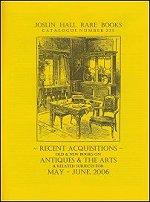
Catalog #284 - RECENT ACQUISITIONS FOR SEPTEMBER-OCTOBER, 2006 is now available in printed format, or on our website. If you would like a printed copy of the catalog, please email us, and remember to include your mailing address. Or you can browse it on our website!

HIGHLIGHTS include -

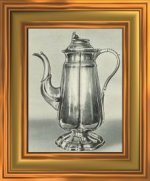
*The earliest printed book on American silver collections.

*The scarce 1917 Memorial Exhibition catalog of paintings by John J. Enneking.

*Howard's 1838 study of color as used by artists, a very early example of the use of chromolithography in book illustration.

*A 1935 Maggs Brothers catalog completely devoted to books about Royalty, issued to commemorate King George V's Silver Jubilee.

*A beautiful leatherbound copy of the catalog to the 1963 Metropolitan Museum of Art exhibition of American furniture & other arts, limited to 445 copies.

*James Jackson Jarves' influential 1867 study of Japanese arts.

*An important and influential 1846 book on fresco painting techniques.

*An unusual pamphlet promoting of a scheme to fix up Independence Square for the 1876 Centennial.

*A very interesting 1881 study of the development of the Christian altar and its fittings.

*A very scarce 1915 Worcester County exhibition catalog of American silver.

*The first book on American gems, published in 1838.

*An enlightening 1894 study of the evolution of the electric light bulb.

*A scarce 1867 book on the laws of color as used in interior decoration.

*An important and comprehensive 1895 report on worker housing around the world.

*Noted antiquarian Charles Dorman's copy of Harrington's 1939 book on Delaware silversmiths, limited to 300 copies, and with extensive handwritten notes by Dorman.

*An interesting 1845 book about collecting paintings.

*A complete 1890s guide to Victorian construction and decorating work methods and tools.

...and many more books on silver, ceramics, glass, furniture, folk art, metals, textiles and other arts, and related topics.

Please take a look by clicking here.

Wednesday, September 13, 2006

The Booklet that Started a Catalog-

A few years ago at the Los Angeles Book Fair I came across this very cool 1862 catalog/promotional book. When I got it back to the office I began to catalog it, but then the idea popped into my head- why not look for some other material and issue an entire ice-related catalog? That eventually morphed into "Fire & Ice", our new catalog out this week. Here is the book that began the project-

"Ash’s Patent ‘Piston’ Freezing Machine and Wine Cooler, For Freezing and Cooling Liquids..." London; George Simpson, Ice Merchant: [1862]. 2nd edition.

The title page continues- “The first perfect application of the natural law of congelation adapted to domestic use; producing results never before accomplished. Also a cheap and effective method of preserving ice, and a recipe for preparing the celebrated freezing powders, (the best substitute for ice yet discovered), together with a variety of other choice recipes for mixing desert ices, ice puddings, &c., including valuable information, interesting to housekeepers, confectioners, &c., and essentially important to residents of all hot climates”.

The Ash Machine, manufactured by Simpson, used an up and down motion which produced ice or cooled liquid in a fraction of the time that cranked machines did. The first 34 pages of this booklet describe and illustrate the machine and the various uses to which it may be put; the booklet then goes on to describe a method for storing ice in the ground, an ice chest sold by Simpson, Simpson’s Patent Freezing Vase, a Patent Butter Cooler, the Seltzogene seltzer bottle, and several other Simpson inventions. This is followed by several pages of testimonials and then a list of nobility, clergy, gentlemen and ship’s officers who use the Ash machine. An interesting and elaborate early promotional book.

Hardcover. 4.5”x7”, 54 pages, line illustrations; elaborately impressed brown cloth with gilt titles; some soil, a little cover wear; text browned, lightly soiled, and with foxing to the title page. [09352] $400.00

See the entire Fire & Ice catalog here.

Tuesday, September 12, 2006

FIRE & ICE-

The last dregs of Summer linger around Foggygates and the Book Elves cling to their lawn chairs every afternoon, resolutely sipping ice-cold lemonade even as the sun sinks behind the trees and the temps dip into the 40s. Evening cookouts are no longer as much about cooking food as keeping warm, which may have given them the idea for our latest printed catalog...

FIRE & ICE -Catalog 282

is now available. It features a selection of books on two diverse yet oddly-related topics- the use of fire and the use of ice in everyday life. Books and other materials on fireplaces, lighting devices, fire-making tools, as well as ice harvesting, icy foods and pastimes, and the making and use of ice for refrigeration are all included.

We have printed copies available (if you would like one, please remember to send us your mailing address), and the catalog is also posted on OUR WEBSITE.

Have fun!

Tuesday, August 29, 2006

Bon Apetit!


Yes, that's Julia Child and her kitchen in corn! This year's "Mike's Corn Maze" at Warner Farm in Sunderland, Massachusetts, features Julia Child, "The French Chef", a graduate of nearby Smith College. Mike has a complete website devoted to this year's maze, past mazes, and other interesting stuff. The designers have even added some "additions" this year to keep things interesting, including a potato bazooka and tomato trebuchet (a sort of catapult). The maze opens this coming weekend, and stays open through October. Amy and I will be mosying over and will have a full report...

Sunday, August 27, 2006

Giant Thistle-

We had the world's tallest thistle growing behind the garage this summer. We never measured it, but Amy is about 5'3"...

Wednesday, August 23, 2006

Fire & Ice

It's funny- some catalogs put themselves together with very little interference from me, and others have to be dragged, kicking and screaming, all the way to the printer. Our new "Fire & Ice" catalog is behaving like that. I'm finally into final paste-up, and it will go the the printer in a few days, to be sent out sometime in early September. It's an interesting catalog, one I've been getting together for at least two years, but kept putting off. One part of it is fire-making devices, fire-powered lighting, fireplaces & fireplace accessories, and so on, and the other is ice-harvesting, ice-deserts, ice-sports, you name it. There are some very cool items included. One of my favorites is a nice copy of Marshall's 1885 book "Ices, Plain and Fancy", which includes some mouth-watering colored illustrations of iced deserts-


Stay tuned for more information!

Tuesday, August 22, 2006

When Irish Eyes are Smiling...

We just got a great book on Irish arts and their history, at a bargain price!

"Making the Grand Figure. Lives and Possessions in Ireland, 1641-1770" by Toby Barnard. Published by Yale University Press in 2004.

”In this pioneering study of the material culture of Stuart and Hanoverian Ireland, Toby Barnard reveals a hitherto unsuspected richness and diversity of lifestyle, habitat and mentality. The compass of the book is impressively wide, from the governing elite of Dublin Castle to provincial towns and the countryside beyond. Looking yet further, it follows the Irish overseas to Britain and the continent of Europe. Through such everyday articles as linen shirts, wigs, silver teaspoons, pottery plates and engravings, Barnard evokes a striking variety of lives and attitudes. Possessions, he shows, highlighted and widened divisions, not only between the rich and poor, women and men, but also between Irish Catholics and the Protestant settlers.”

There are chapters focusing on the house, interiors, goods, pictures, the park & garden, sport, dress, Dublin, going abroad, and Society.

Hardcover. 8”x9.5”, xxii + 497 pages, b/w and some color illustrations, dj. Published at $50.00. We have a limited number in stock for $25.00.

Tuesday, August 15, 2006

Going Once! Going Twice!

Our newest printed catalog of vintage auction catalogs is now available- it features 182 auction catalogs on a variety of topics- Great & Notable Collections; Furniture & Americana; French Furniture & Decorations; Bronzes; Ceramics & Glass; China Trade; Orientalia; Clock & Watches; Jewelry; Garden Statuary & Furniture; Arms & Armor; Fine Arts; Antiquities; Books & Manuscripts, and 'Varia', which includes catalogs featuring antique autos, aviation, canes, carpets, cat art, chess sets, cutlery, dolls, interiors, Ireland, the Queen's Jubilee, magic, Medieval arts, movie memorabilia, needlework, tapetsry, textiles, and wine.

The catalog is also viewable on our website.

If you'd like a printed copy, please let us know!

Wednesday, August 09, 2006

A Beautiful Publisher's Overstock-

Have we got a great book about Egyptian arts!

"Gifts of the Nile. Ancient Egyptian Faience", edited by Florence Dunn Friedman, and published by Thames & Hudson in 1998.

”This catalog, from the Museum of Art, Rhode Island School of Design's international traveling exhibition, is an in-depth study of ancient Egyptian faience—figures, jewelry, and objects made from a non-clay ceramic material with a bright blue or polychrome glazed surface. More than 200 pieces spanning 3,000 years are displayed here in 224 color plates, with an additional 250 black and white photos and drawings, depicting a variety of small domestic items: lidded jars and pots; a portable, partitioned inkwell with a rotating top; a royal cosmetic jar; inlay tiles; goblets; scarabs; and amulets. Illustrated essays explore the meaning of faience within Egyptian culture, discussing its uses, symbolism, and technology.”

This is a hardcover. 9.5”x12”, 288 pages, color and b/w illustrations. New.

Published at $75.00, and a bargain at that price, we are offering a limited number of copies for $40.00 each.

Tuesday, August 01, 2006

Our New Summer Catalog-


It's Summertime, and the living is muggy at Foggygates. The Book Elves knock off work in the Cataloging Cave early every afternoon and spend the rest of the day lounging in beach chairs on the lawn, under the apple and cherry trees. They've hooked up some old plumbing stuff we had in the carriage house, along with some old concrete garden gnomes, into a sort of fountain which seems to be shooting out lemonade.

However, before they violated at least 3 town ordinances and attracted every bee in Western Massachusetts to the backyard, they finished work on a new printed catalog-

"SUMMER, 2006" is now available either in printed format, or here, on our website. It features almost 150 books, a mix of recent acquisitions and other books from our stock on the decorative and fine arts, as well as other odd material that just happened to slip by.

If you'd like a printed copy, please let us know.

Sunday, July 30, 2006

More Things We Find in Books-

One of the most fascinating things about bookselling can be the odd items you find in books, and the stories they can lead you to unearth once you begin hunting around. A case in point is a copy of Stanley Casson's 1928 study "Some Modern Sculptors" which we bought a few years ago. It's a great book, but neither scarce nor expensive.
However, when we examined our copy we found that it had once been owned by Francis Henry Taylor, a Director of the Metropolitan Museum of Art, and had three typewritten letters from Casson to Taylor tucked inside the rear endpapers!

Well, that seemed interesting, so we started doing some further research...

Stanley Casson (1889-1944) was a multi-talented art scholar and army officer who read Classical Archaeology at Oxford, served as Assistant Director of the British School at Athens, Special Lecturer in Art at Bristol University, and was Director of British Academy Excavations at Constantinople in 1928-1929. His publications include numerous articles and books on the subject of Classical Antiquities.

He also had two distinguished war records, starting the First World War as an officer with an infantry regiment in the trenches of Flanders before becoming part of the British Salonika Force in 1916 and finally serving on the General Staff in 1918. His war poems, written in the Flanders mud, are now part of the War Poetry Collection at Napier University in Edinburgh.

Starting in 1939 he again served the British government in Holland, and later transferred to Greece where he was serving as a liaison officer when he was killed in an airplane crash in 1944.

Now, what about Francis Henry Taylor? Taylor (1903-1957), was a former Curator of Medieval Art at the Philadelphia Museum of Art, Director of the Worcester Art Museum at about the time the letters we found were written, and eventually became Director of the Metropolitan Museum of Art.

The three typewritten letters were written to Taylor by Casson, on New College, Oxford letterheads, from the early 1930s. The first letter simply greets him and extends Casson's admiration for an article that Taylor wrote on Greek sculpture; the other two were evidently written after Taylor had taken a trip to London and the two had become friends.

A few excerpts give a general idea of the scholarly goings on:

[Aug 7th] "I enjoyed that evening in London more than I have enjoyed anything in this country for a very long time. My only sorrow is that I cannot give the return party to you here... How precisely I got home after you had decanted me from the taxi I cannot say. By strange luck I got into the right train and there remained semi-comatose until Oxford. Again Heaven aided and there was actually a taxi at the station... Meantime I suggest a good line of research would be to find out if Miss [R] keeps a stature of Hermes in her bedroom... By the way, Wilenski has just written a crazy book on "Modern Sculpture" that I find would serve as an admirable whipping post for discussing the ultra-modern coprolite-sculptors... Eric Gill, whom I saw on Sunday after our carouse, is commissioned to do some 150 full size figures on a new cathedral at Guildford in Surrey. He is getting together a band and going to do it in the real mediaeval manner (I mean as regards the organisation)."

[Nov 2, 1932] "As to the statue, actually I see no reason to doubt it and it really is a scoop... but there will be Hells own row in Greece and someone will get the permanent push in Athens. I cant imagine how on earth they get such things out without being spotted. ... Meantime if in due course I can come over your way, as you suggest, I feel little doubt that I shall see U.S.A. a bit more from the right viewpoint than most of the many academics that sour the atmosphere of your genial land. Gawd, what stiffs we do send you sometimes!".

I love this stuff. Sometimes it's true- you can't judge a book by its covers!

Saturday, July 29, 2006

It's Hot Outside!

Well, "late next week" turned into more than two weeks, but we are back now, and will be posting here on a regular basis for the rest of the Summer. We've got our new Summer catalog coming out this coming week- watch for more announcements about that in the next few days!

We haven't been blogging the past few weeks, but we've been quite busy getting ready for August and the Fall.

Stay tuned!

Tuesday, July 04, 2006

Some Patriotic Music-


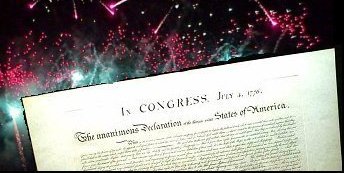
Just in time for 4th of July Week, we found an 1831 salute to Old Glory, a single leaf printing the music and words to “Our Flag is Here! An American Patriotic Song”, removed from a disbound portion of the August, 1831 edition of ‘Atkinson’s Casket’. We do not normally go around slicing pages, but this edition was already mutilated, and it seemed that the song would be of interest to American flag enthusiasts of all stripes. The note at the top of the page states-

"The Music and Words of the following Song, were, we understand, composed by a sailor, on board the Java frigate. They have never before, we believe, been published. The feelings of an American tar, are truly expressed in these words, and many a landsman will cordially join in the Chorus. The Song has, we judge, only to be known to become very popular.”

The “Java frigate” referred to was an American 44-gun vessel, named for the famous War of 1812 naval battle between the USS Constitution and the British frigate Java. The American frigate was laid down in Baltimore in 1814, and made her maiden voyage from Baltimore under the command of Captain Oliver Hazard Perry on August 5, 1815. After fitting out she was ordered to the Mediterranean in 1816, still under Perry’s flag, and while there Perry went ashore in Algiers and “persuaded” the Dey of Algiers that it would be better to stop harrassing American interests, as he had promised in a treay signed the previous summer, than to ignore it as he had been doing before the American fleet showed up. Before returning home Perry and Java also sailed, in company with the Constellation, Ontario, and Erie to show the flag off Tripoli. In 1827 Java returned to the Mediterranean under Captain William M. Crane, and was the flagship of Commodore James Biddle for a time. She returned to America in 1831, was based at Norfolk for several years, and was broken up in 1842.

As for the song's immortality, a Google search for the title only brings up one possible match, a transcription of verse by the same title in the Civil War journal of a young woman. The words, while not quite as memorable as those of the Battle Hymn of the Republic or as moving as those of America the Beautiful, have a certain ring to them-

“Our flag is here! Our flag is here!
We hail it with three loud huzzas!
Our flag is here! Our flag is here!
Behold its’ glorious stripes and stars.
That flag is known in every sphere,
The standard of a gallant band,
Alike unstain’d in peace or war,
It floats o’er freedom’s happy land.

Stout hearts have fought for that bright flag,
Strong hands maintain’d it mast-head high;
And oh! To see how proud it waves,
Brings tears of joy in ev’ry eye.

Our flag is here, &c.

That flag has stood in battle’s war,
‘Mid foemen strong and foemen brave,
Strong hands have tried that flag to low’r,
And found a speedy, wat’ry grave.

Our flag is here, &c.


We have put the sheet up on Ebay in an auction starting July 6th. "Foggygates" will be on vacation mode for the week, and will return late next week.

Wednesday, June 28, 2006

Catalogs & stuff-

Things are slowing down at Foggygates as we move toward the 4th of July Week, but we do have a new catalog out this week- Books on Decorative Arts, including folk art, interiors, metalware & iron, textiles, & other “Americana” & related subjects. This catalog is available only as a printed catalog, so if you would like a copy, please let us know.

Things are also quiet on Ebay as we juggle our own and other folks vacations around the 4th; we have a pair of aviation items up now, and will be adding new material beginning on July 1st. Stay tuned for more details...

Friday, June 23, 2006

Gentlemen- More Dolce, Please...

I'd like to spend today featuring one of my favorite items in our current crop of books on Ebay- I'll be sad to see this one go to a new home. It's an uncommon early American traveler's phrase book for a popular 1830s destination of American writers and artists- Italy!

The title is "De Porquet’s Italian Phrases; or, Il Fraseggiatore Toscano. A Copious Choice of Italian Sentences to facilitate a complete knowledge of the formation of the verbs and syntax of that elegant tongue" and it's by Carlo Alfieri, "Professor of the Italian language, London". Published in Boston by S. Burdett & Co., in 1832. “With familiar and easy dialogues in Italian and English, and rules on the different forms of addressing persons, used by the Italians”.

Entire books have been written on the exodus of Americans to the Continent in general, and Italy in particular, in the 1830s and 40s. Nathaniel Hawthorne, Herman Melville, and sculptors Hiram Powers and Horatio Greenough all sojourned there. American artist Rembrandt Peale wrote his own guide to traveling in Italy, and sculptor Thomas Crawford settled down in Rome and became a leading figure in the American expatriate community there for several years.

Charleston, South Carolina artist James DeVeaux loved Italy so much that he lived there for several years before his tragic early death in 1844. In fact, although he loved Rome and Venice and Florence, DeVeaux did not enjoy the excess of visiting Americans very much. While staying in Florence he wrote- "There are American painters and sculptors here of all sorts. I find nothing in their society to please me, and so keep to myself. Strange that so much venom should exist among professors of a liberal art -but the truth is, that envy and jealousy are our (painters) besetting sins, and the first thing I heard of here was a flare up at Rome 'mongst the American artists, and now they are all in Florence for the summer, so I keep housed."

And yet, the warm Italian sun and pretty signoras and centuries of art and monuments would draw the visitor out again. DeVeaux continued a few months later-

"Whilst looking down from the steeple of the Campodoglio upon Rome, my companion warmed into a classic fit, and bringing up from the bottom of his pockets notes and memoranda of history gathered from Goldsmith and others, he would glance from one scene to another, till I was deluged in declamation, -flinging his arms into the air and stretching himself so far over the railing, as to induce me to wrap the skirt of his coat around my hands to ensure his safety, -he pointed to the spot where "Ceasar's body lay", -passed to Lucrezia the chaste, and Virginia the innocent, -Camillus pausing to look back upon the city, from whence he was issuing a banished man; and had got as far into his story as to be busily engaged with the Goths and Vandals in sacking Rome over again, when the old attendant cut short the oration by declaring that the "Signore" had detained him too long, as his wife waited his presence for dinner."

But we have strayed far from our charming little phrase book. Or perhaps not, because this is just the sort of book any of these American travelers would have picked up when preparing to take the “The Tour”, or join the expatriate community there. An interesting little piece of Americana and not all that common- a search of internet sources failed to turn up another copy, and the OCLC database of institutional library holdings (which is an imperfect tool, but still gives some indication of scarcity) locates only 3 copies.

It sells on Ebay Sunday evening, and I'll be sorry to see the little fella go.

Thursday, June 22, 2006

A Great 19th Century American Library Catalog

Every so often a book will give us a glimpse of an important change in the way we do or see things. Such is the case with Charles Ammi Cutter's "Catalogue of the Library of the Boston Athenaeum 1807-1871", published in Boston between 1874 and 1882.

Cutter [1837-1903], a founding member of the American Library Association, was an important influence on modern librarianship and cataloging. He graduated third in his class at Harvard at age 18, spent several years cataloging the Harvard library, and married Sarah Appleton, one of the first female library assistants in the Harvard cataloguing department.

The Boston Athenaeum was a leading literary and artistic society in the 19th century, and its library contained a wide breadth of important material on American art, history and literature.

When Cutter became the Librarian of the Boston Athenaeum he was faced with the daunting task of cataloging its quarter-of-a-million volumes, a project that would eventually take almost a decade. Cutter's approach, which was designed to be most helpful to the patron looking for books (instead of the librarian or cataloguer organizing them) would be expanded upon in his "Rules for a Dictionary Catalog", and would become a cornerstone of modern Library Science. Throughout his career at the Athenaeum and as a President of the ALA and editor of its Journal, Cutter would be concerned with making the library more useful to patrons, especially those who needed it to further their educations and place in life.

After he left the Athenaeum and was Librarian of the Forbes Library in Northampton, Massachusetts, Cutter would write- "We are to buy the best books... Not the best book for the librarian, nor for the book committee, nor for the self-educated book committee outside the library, nor for the shelves (to keep them warm by never leaving them); but the best books to satisfy our clients for amusement and knowledge and mental stimulus and spiritual inspiration. The library should be a practical thing to be used, not an ideal to be admired."

Wednesday, June 21, 2006

Ben Franklin rewrites the Bible-

Got time for another Ben Franklin tale? I've been a big fan of ol' Ben, from the time I first read Robert Lawson's "Ben and Me" in third or fourth grade.

We recently found a copy of a little American Institute of Graphics Arts keepsake booklet done in 1927 called- "The Parable Against Persecution. A Proposed New Chapter for the Bible. By Benjamin Franklin".

Why, you ask, was Ben Franklin writing Bible chapters? That's a perfectly reasonable question...

The parable itself can be traced back to ancient times (but it was never in the Bible)- it tells the tale of a visitor to Abraham who is at first welcomed, and then chased into the night when he admits that he does not worship God. God then rebukes Abraham- “Have I borne with him (the visitor) these hundred and ninety eight years, and nourished him, & cloathed him, notwithstanding his rebellion against me; & couldst thou not, that art thyself a sinner, beare with him one night!”

So Ben Franklin rewrote the original parable in Biblical verse and committed it to memory. When he was in the company of a Bishop or other church figure Franklin would open a Bible and then recite the parable from memory, while pretending to read from the book. He'd then slam the book shut and demand of the churchman what chapter and verse he had just read.

Now was that really very nice?

The fun was ruined when a friend in England published the parable and attributed it to Franklin. We put the booklet, which has a striking Art Deco illustration by Carl Purlington Rollins, up on Ebay. Click our Ebay link for more info.

Monday, June 19, 2006

Glass Furniture?

We just got a carton full of a great new book from the Corning Museum of Glass- "European Glass Furnishings for Eastern Palaces" by Jane Shadel Spillman. Corning Museum of Glass: 2006.
“Written as a supplement to the Museum's major summer exhibition, ‘Glass of the Maharajahs’, this book explores the little-known era in glassmaking history when European glass manufacturers tailored one-of-a-kind and limited-production glass furniture to the tastes of the wealthy Indian elite. The very idea that a chair could glitter like a diamond, catch light like a colored gemstone, and still function as seating must have astounded those who first encountered glass furniture in the mid- to late-19th century. Some of the furniture and printed materials are drawn from The Corning Museum of Glass; others are borrowed from Indian palaces, private homes and archival collections.”

A fascinating catalog. The text begins by discussing the early 19th century glass furniture of Europe and Russia, and then moves on to India. Firms such as F.& C. Osler, Jonas Defries & Sons, Coalbourne Hill Glass Works, Baccarat and Elias Palme are all discussed at length. One of the most fascinating aspects of this book was the ability of the author to find modern photographs, period prints, and original factory designs for the same pieces of furniture and lighting.

Hardcover. 8.5”x11”, 144 pages, 125 illustrations. New. [90217] $24.95

Friday, June 16, 2006

Which Washington?

We have a charming and interesting little limited edition, 1927 book about bookplates selling tomorrow night on Ebay. It's called "Washington Bookplates" and I bought it at an auction a few weeks ago, thinking it was about George Washington's bookplates, or bookplates featuring him, or connected with him, or something like that... but no, it's about bookplates created for Washington-state artists for Washington-state bibliophiles. Well... rats! Not that there's anything wrong with that, it's just that I was expecting otherwise. So, we put it up on Ebay, with no reserve, and it will go to the highest bidder tomorrow. Click the Ebay auctions link to see the listing.

And next auction I will look at the books more carefully...

Fridays-

We've finally got some decent weather here at Foggygates, so the outside of the house is swarming with painters and roofers. They got the last of the gutters down (it came crashing to earth right outside my office window), and the new sheathing is going up. Exciting, eh? Well, it looks a lot better.

We put in a real burst of energy and posted a number of auctions for Americana and related stuff on Ebay. Click our auction link to the right for details- we included a very nice collection of 19th century maps of the Panama-area, a scarce 1825 American militia manual, some good hunting books -all sorts of stuff, all starting at $9.99 with no reserves. Go ahead- get a bargain!

The Furniture Catalog is out this week, and you can see a copy on the website, or let us known and we can mail you one.

Thursday, June 15, 2006

The Problem with Publishers-

We put a very amusing Ben Franklin item up for auction on Ebay last night, which is worth quoting from. The booklet is titled "A Letter from Benjamin Franklin, Passy, April 21, 1785, to Benjamin Vaughan, containing some observations on the prodigal practices of publishers". It was published in Princeton by the Friends of the Princeton Library in 1949. This is a facsimile of Franklin’s famous letter denouncing the practices of English publishers, together with a line-by-line transcription, and introductory remarks by Carl Van Doren and Julien P. Boyd. Franklin begins by writing of the controversy over cheap Irish goods in the English marketplace, and eventually gets around to books-

"If Books can be had much cheaper from Ireland, (which I believe for I bought Blackstone there for 24s when it was sold in England at 4 Guineas) is not this an Advantage, not to English Booksellers indeed, but to English Readers and Learning? And of all the Complainants perhaps these Booksellers are least worthy of Consideration. The Catalogue you last sent me amazes me by the high Prices, (said to be the lowest) affix’d to every Article. And one can scarce see a new Book, without observing the excessive Artifices made use of to puff up a Paper of Verses into a Pamphlet, a Pamphlet into an Octavo Volume, and an Octavo into a Quarto, with Scab-boardings, white Lines, sparse Titles of Chapters, & exorbitant Margins, to such a degree, that the Selling of Paper seems now the Object, and Printing on it only a Pretence".


For more information click the "Our Ebay Auctions" link in the right-hand column.

Tuesday, June 13, 2006

Our New Furniture Catalog-

The Book Elves are glued to World Cup action on the TV in the Cataloging Cave, and were quite upset by yesterday's loss by Team USA. However, before they donned the traditional black and crimson robes which either signify deep mourning or graduation from an Ivy League College (we're still not quite sure where they got them) they finished our new catalog-

Catalog #277: BOOKS ON FURNITURE & CABINETMAKERS is now available, either as a printed catalog (please send us your mailing address) or you can browse it on our website.

If you'd like a printed copy, please let us know (and include your mailing address).

Monday, June 12, 2006

Speaking Plainly-

Today we're happy to bring you an important American furniture reference which has just been reissued- "Neat Pieces. The Plain-Style Furniture of 19th Century Georgia" by William & Florence Griffin, et al. University of Georgia Press: 2006.

This is a new edition of the classic and important 1983 catalog. This loan exhibition of Georgia "plain" furniture of the period 1820-1860 was the result of five years of painstaking work; 2,000 pieces of furniture were studied before the final 126 were chosen. Each piece is carefully described and illustrated, and there is an introduction which explains the development of Georgia, her cabinetmakers, and their furniture. In addition to the furniture the organizers turned up a wealth of information on individual Georgia cabinetmakers, and this information is also presented here. An important contribution to the literature on early Southern decorative arts. This augmented edition features color illustrations of most of the pieces, and a new Introduction. Softcover. 8"x11", 236 pages, color and b/w illustrations. New. [90193] $39.95

Friday, June 09, 2006

Trapped in Poetry

An interesting thread came up on an eamil list earlier in the week. Somebody mentioned "The Eyre Affair" by Jasper Fforde, in which one of the minor characters gets trapped inside a Wordsworth poem. This brought up the question- if you could be trapped inside a poem, what poem would it be? Or, if you feel like you are trapped inside a poem, what poem is it?

For some reason for me Lewis Carroll immediately sprang to mind...

`Twas brillig, and the slithy toves
Did gyre and gimble in the wabe:
All mimsy were the borogoves,
And the mome raths outgrabe.

"Beware the Jabberwock, my son!
The jaws that bite, the claws that catch!
Beware the Jubjub bird, and shun
The frumious Bandersnatch!"

He took his vorpal sword in hand:
Long time the manxome foe he sought --
So rested he by the Tumtum tree,
And stood awhile in thought.

And, as in uffish thought he stood,
The Jabberwock, with eyes of flame,
Came whiffling through the tulgey wood,
And burbled as it came!

One, two! One, two! And through and through
The vorpal blade went snicker-snack!
He left it dead, and with its head
He went galumphing back.

"And, has thou slain the Jabberwock?
Come to my arms, my beamish boy!
O frabjous day! Callooh! Callay!'
He chortled in his joy.

`Twas brillig, and the slithy toves
Did gyre and gimble in the wabe;
All mimsy were the borogoves,
And the mome raths outgrabe.


well now.

Here's the poem that started the discussion-

"Daffodils" by William Wordsworth (1804)

I Wander'd lonely as a cloud
That floats on high o'er vales and hills,
When all at once I saw a crowd,
A host, of golden daffodils;
Beside the lake, beneath the trees,
Fluttering and dancing in the breeze.

Continuous as the stars that shine
And twinkle on the Milky Way,
They stretch'd in never-ending line
Along the margin of a bay:
Ten thousand saw I at a glance,
Tossing their heads in sprightly dance.

The waves beside them danced; but they
Out-did the sparkling waves in glee:
A poet could not but be gay,
In such a jocund company:
I gazed -- and gazed -- but little thought
What wealth the show to me had brought:

For oft, when on my couch I lie
In vacant or in pensive mood,
They flash upon that inward eye
Which is the bliss of solitude;
And then my heart with pleasure fills,
And dances with the daffodils.


Of course, given the fact that it's been raining here for about a month and a half, maybe something about rain would be more appropriate...

Wednesday, June 07, 2006

Railroads...

We have some interesting lithographs of the early West up for auction on Ebay this week. These plates are from the 12-volume set "Reports of Explorations and Surveys, to ascertain the most practicable and economical route for a railroad from the Mississippi River to the Pacific Ocean", published by the Government Printing Office between 1855 and 1861. What was this all about? The answer is a single word: Railroads.

In the 1850s everyone agreed that a transcontinental railroad should be built, but the question was where to build it. Political and business rivalries contended to stop any project, or even preparation for the project, for a number of years. Which states would it traverse and, most importantly, where would it start and end? Did the Constitution even allow the Federal Government to be involved in the project? Finally, in 1853-4, Senator Gwin of California got an appropriation into the War Department budget to allow the Secretary of War (Jefferson Davis) to send out surveying parties. The trouble was just beginning...

After the political and sectional dust settled there were four routes to be surveyed- a northern route along the Missouri River, over the northern Rockies and to Puget Sound, along the 47-49th parallels. A middle route, favored by Senator Thomas Hart Benton, following the Kansas River to the Arkansas, through Salt Lake, along the 37-39th parallels. Another route, the 35th parallel route, went from Arkansas through New Mexico and Arizona and across the Mojave Desert. The fourth route, the southern-most and the one favored by Secretary of War Davis, traveled from Texas along the Gila River to San Diego. There were further surveys on the Pacific coast, outlining routes to link San Diego with San Francisco, and San Francisco and the Pacific northwest. Originally the project report was envisioned as taking up three or four volumes.

By the time the final volume was published in 1861 the number of volumes had swelled to twelve and the country had other problems to deal with. The final volumes were an unparalleled survey of the flora, fauna, peoples and landscape of the American West. The books and illustrations provided details not only on the topography of the land, but the scenery, animals, plants and inhabitants. It remains a cornerstone piece of Americana, and a complete set today can cost $10,000.

We have some interesting prints from various volumes in the set. One word of explanation- the prints we are selling (illustrated here) are not actually framed- I've done some computer wizadry to show them as they will look when they are framed. And just so there's money left over for framing, we're starting them at $9.99 each, with no reserve. Click our Ebay auction link in the right-hand sidebar for all our current auctions.

Monday, June 05, 2006

A Whale of a Silver Book-

Have we got a silver book for you! "English, Irish, and Scottish Silver: at the Sterling and Francine Clark Art Institute" by Beth Carver Wees is a giant of a book, 9"x12", and 595 pages. Here's what the publisher had to say-

"The Clark Institute in Williamstown, Massachusetts, holds one of the largest and finest collections of English silver outside of England, including many masterpieces. It was begun in the 1910s by Singer sewing machine heir Robert Sterling Clark, who bought both luxury items by prominent makers and domestic wares, many of which had been owned by the most celebrated patrons of the 18th and 19th centuries. This substantive volume, with more than 1200 duotone illustrations and 19 color plates, catalogs every object in the collection, including 76 pieces by Paul de Lamerie and many more by other great Huguenot silversmiths. Detailed entries about some 850 objects provide marks, inscriptions, heraldry, construction notes, comments, provenance, and exhibition and publication history."

The book was published for $125. We have a limited number available for $40.

Wednesday, May 31, 2006

Let the Sunshine In-

As I have mentioned before, sometimes I come across books which have interesting stories behind them. Usually the stories concern either the author or the history of the book itself, but sometimes they have to do with prior owners.

We have a copy of an 1884 book by Arthur Charleston titled "Tin: Describing the Chief Methods of Mining, Dressing & Smelting it Abroad". An interesting enough book itself, if you are inclined tin-ward, but additionally, this copy bears the ownership signature- "Rev. M.A.G. Himalaya, Braga, Portugal, 1907" on the title page, and therein lies another story.

Manuel Antonio Gomes 'Himalaya' [1868-1933(?)], "Father Himalaya", is considered to be the father of solar energy in Portugal, and a visionary pioneer in the field of renewable energy. After taking Holy Orders in the Society of Jesus he studied natural sciences, physics, chemistry, mathematics and astronomy, and traveled to France where he studied with the noted chemist Marcelin Berthelot.

In 1899 he was granted a patent by the French government for a device to produce heat by focusing the sun's rays; in 1900 he constructed a test device in the Pyrenees and attained a temperature of 1100 degrees centigrade.

In 1902 an experiment in Lisbon attained 2000 degrees, and he made a final, startling demonstration of the power of such a device at the St. Louis Exposition in Missouri 1904. There he constructed his "Pireliofero", a 3-story high parabolic mirror mounted on a monstrous iron framework which focused sunlight on an oven mounted at the top of the structure. The oven reached a temperature of 3500 degrees, melting a test chunk of basalt, and Father Himalaya won a Grand Prize for his efforts.

He promoted other forms of renewable energy as well, including tidal energy and hydroelectric power, wind power, and geothermal power. Alas, there was plenty of cheap coal and oil available, and his work was generally ignored and forgotten. Father Himalaya retired to become chaplain at Viana Castle, a charity home, where he died at the age of 65. His work has excited interest in Europe in recent years, and his ideas have only lately attained a measure of the respect which eluded them in his lifetime.

Father Manuel Antonio Gomes 'Himalaya' and his "Pireliofero"

Friday, May 26, 2006

Gutters and Moles and... Bears?? Oh my...

Well, the bucket-truck has been called off. Our contractor has a new roofer who thinks the job of removing the old gutters and replacing the facia on the house crown can be done with scaffolding, so next week they're going to put that up. It'll be less dramatic, but also better for the lawn- we weren't all that thrilled about a big truck driving all around the house, though with the front lawn currently a Mole Paradise I'm not sure it would have looked all that different. If you used to have problems with moles under your lawn and you don't have any this year, they're all at Foggygates, chawing down.

Speaking of wildlife- I walked down to the local barbershop yesterday (about a quarter mile away), and on my way back, in the middle of a sunny afternoon, I saw a big black bear come across the church rectory's lawn (right next door to us), wait for a passing car, and then lope across the street and wander off into the woods on the other side. That caused a little excitement in town for a while. I'd never seen a bear in the wild before; Amy saw some years ago while camping at Yellowstone, but I think the operative words there are "camping" and "Yellowstone", which seem more appropriate venues for bear watching than "the neighbor's lawn".

And our cats wonder why we don't let them out...

Tuesday, May 23, 2006

Auction Catalogs-

The Book Elves have been pruning the trees and shrubs here at Foggygates, and somebody (I'd really, *really* like to know who) sent them a little book titled: "Erotic Topiary Designs for Beginners" which they have been using on the azaleas. We now have a thirty-year old azalea shaped like the picture on the cover of the latest Madonna album, and traffic on our little street has increased tenfold this week.

However, before they got us summoned before the next meeting of the Board of Selectman, they finished our new printed catalog #274, "Going Once... Going Twice... A Selection of Auction Catalogs from Our Stock", which is now available.

This issue includes catalogs covering Collectors & Collections; French Decorative & Fine Arts; Furniture & Americana; Folk Art; Metals; Garden Furniture & accessories; Ceramics; Glass; Silver; Jewelry; Judaica; Russian Arts; Miniatures; and Horology.

Please let us know if you would like a printed copy. You can also browse it on our website.

Monday, May 22, 2006

Spring?


Well, the sun has finally come out at Foggygates -but it's cold! It seems that this May we either have rain or chilly weather. I miss Spring. The rains of the last few weeks caught our roofers just as they were about to remove the gutters and replace the facia boards around the top of the house crown, but they hope to do that in the next few days. It's going to be quite an operation- because of the shape of the roofs, they can't get up there safely with ladders to remove the facia, so they are going to bring in one of those bucket trucks. It's going to be quite a sight for the neighbors, and I'll try to get some pictures.

We've got our new Catalog of Auction Catalogs hitting the streets tomorrow- let us know if you would like a free copy. It will also be on our website. More about that tomorrow.

Thursday, May 18, 2006

New Titles in Our New Catalog-

If you have glanced through our new May-June catalog, you will have noticed by now that we have added quite a few in-print titles to our stock. We started adding in-print titles a few months ago, and it proved so popular that we are augmenting that area of our stock, and will continue to expand it in the coming months. There are some great new books out there, so why not carry them? This month we feature important new books on windsor chairs, mocha ware, Gothic Revival decorative arts, Pairpoint glass, and Georgia furniture. If there is anything in the way of in-print antiques references you are looking for, please let us know.

You can browse our new May-June catalog on our website, or if you would like a printed copy, please let us know.

Tuesday, May 16, 2006

Our New May-June Catalog-

It's been raining for about 10 days now, with no end in sight. The Book Elves are busily constructing an ark. However, before they loaded the shovels and rakes and implements of destruction into the old clawfoot bathub in the basement and tried to drag it down to the Connecticut River, they finished our new May-June catalog, which is available either in printed format, or on our website.

Please let us know if you would like a printed copy, or you can browse it here.

Friday, May 12, 2006

An Impressive Collection of Judaica-

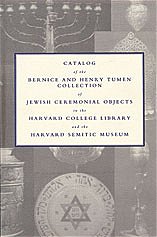
We just bought the remaining copies of a very nice small catalog of an impressive Judaica collection-

"Catalog of the Bernice and Henry Tumen Collection of Jewish Ceremonial Objects in the Harvard College Library and the Harvard Semitic Museum" by Violet Gilboa. Published by the Harvard University Library in 1993.

This volume features photographs and descriptions of 166 Jewish ceremonial objects including wine cups; beakers; Sabbath lamps; candlesticks; spice boxes; Hanukkah lamps; Torah pointers; crowns, shields, and finials; plates for the Passover Seder and other occasions; charity boxes; Esther scrolls; containers for the etrog fruit used on Sukkot; marriage rings; amulets; and others. The vast majority of the objects are made of silver, with some additional pieces of pewter, a few brass and ceramic objects, and some textiles. Violet Gilboa is Littauer Hebraica Technical and Research Services Librarian at the Judaica Division of the Harvard College Library. Softcover. 6”x9”, 172 pages, b/w illustrations; bibliography. $25.00

We're offering a special price on them this week-
Single copies- $15.00, postpaid (Media Mail)
5 copies- $6 each ($30.00 postpaid -Media Mail)
10 copies- $5 each ($50.00 postpaid -Media Mail)

Wednesday, May 10, 2006

Victorian Fashions-

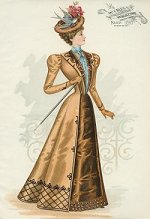
We are still unpacking boxes here, and recently came across several interesting Victorian fashion plates from McCall's Magazine, which we promptly plopped up on Ebay. These are somewhat stylized (think wasp waists and oddly shaped bodices) and quite colorful. We put in starting bids down at $9.99, with no reserves, so if you need something to spice up your walls, click the "Our Auctions" link in the right-hand column!

Monday, May 08, 2006

The Gothic Revival-

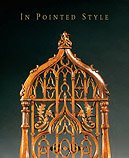
We have a new exhibition catalog in stock- "In Pointed Style. The Gothic Revival in America, 1800-1860".

The catalog is by Elizabeth & Stuart Feld, and accompanies the current exhibition at the Hirschl & Adler Galleries in New York, the first comprehensive exhibition of Gothic Revival furniture and arts in 30 years.

This is a wonderful catalog, featuring furniture, architecture, glass, lighting, silver and other decorations. It is illustrated with many period prints and artwork, as well as stunning new color photographs,and has an introductory essay by David B. Warren. Softcover. 9”x11”, 144 pages, color and b/w illustrations. Bibliography. [90200] $45.00

Friday, May 05, 2006

Point of View-

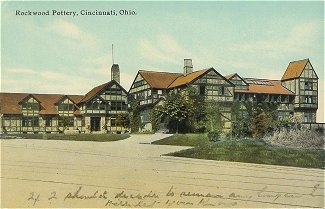
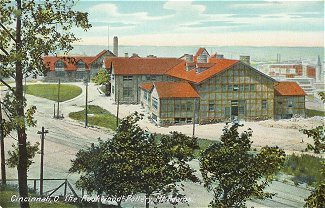
Cincinnati's Rookwood Pottery is legendary among art pottery collectors, and probably the best known American art pottery. I recently found several ca.1910 postcards showing the pottery which I thought were interesting.

This one, the oldest of the two, shows a front view that makes the pottery look almost like a rambling tudor mansion in some suburb-


This view, apparently taken a few years later, shows a more business-like viewpoint-


Wednesday, May 03, 2006

Liar, Liar?

He sailed the Mississippi...
or did he?


Father Louis Hennepin was a Franciscan Friar who accompanied La Salle on his Western expedition of 1679 to reach the Gulf of Mexico from Canada, via the Mississippi River. After the trip Hennepin wrote his famous “A New Discovery of a vast Country in America”, originally published in French in 1697 and in English in 1698.

Hennepin tells of his travels with La Salle on the Griffon, the first ship on the Great Lakes, to Green Bay and across the Mississippi by the Illinois route. From there Hennepin was sent with an expedition, led by Michel Aco, which was the first to explore the upper Mississippi valley. They ascended the river to Minnesota, where they were captured by the Issati Sioux. The party was eventually rescued by Duluth who insisted on their release, though some claim that Hennepin’s constant complaints and lectures had already become so tedious to the Sioux, that they were happy to be rid of him.

Unfortunately, Hennepin was a notorious liar. In his accounts he claims close association with La Salle, but La Salle thought little of Hennepin, even warning his colleagues about Hennepin’s habit of exaggeration. Prompted by his efforts at political maneuvering and his own penchant for tellings fibs, Hennepin’s accounts of his journeys along the Mississippi vary from only slightly overblown to outright plagiarism. He claims to have traversed both the upper and the lower Mississippi all the way down to the Gulf of Mexico, but the time between his departure from the country of the Illinois and his capture by the Issati is not sufficient for such a long canoe voyage.

Despite the falsehoods about some aspects of the expeditions described in his narrative, Hennepin’s book became a standard text on North America. It should also be said that he was an acute observer, and his books contain detailed and accurate descriptions of the characteristics, arts, and customs of the Indians. He made careful note of the wildlife they encountered, and his descriptions of natural history convey not only a physical description of the animal in question, but Hennepin’s own personal reaction to the creatures as well. His is the first written description, complete with illustration, of Niagara Falls and his examination of every facet of American Indian culture is a gold mine of information.

In 1903 Reuben Gold Thwaites edited a new edition of “A New Discovery of a Vast Country in America”, with facsimiles of the original title-pages, maps and illustrations, and a new introduction, notes and index.

We have a copy of the 1903 edition up for auction this week -click our Auction link in the right-hand column.


We're hard at work on our new May-June catalog, which will be mailed in a few weeks -if you're not on our mailing list and would like a copy, please let us know.


We're also hard at work (or hardly at work) on the new edition of A Grave Affair -Books on Gravestones & Memorial Arts -again, let us know if you would like a copy of the catalog when it is ready.

Tuesday, May 02, 2006

A New Windsor Chair Book-

We just got a case of that nice new book on windsor chairs everyone's talking about-

"Windsor-Chair Making in America -From Craft Shop to Consumer"
By Nancy Goyne Evans. Published by the University Press of New England in 2006. Hardcover, 9"x12", 496 pages, color and b/w illustrations, dj. $65.00

"The definitive work on the production of Windsor furniture, from one of America’s premier authorities. Drawing principally on original source materials, Nancy Goyne Evans’s elegantly written and extensively illustrated book presents an authoritative and absorbing historical picture of the vernacular chair shop and industry. Of the book’s five chapters, three deal extensively with the craft shop. Evans discusses everything from structure to tools and equipment, from shop personnel to power sources, and from raw materials to ornament, both painted and stenciled. A chapter on marketing explores the booming Windsor-chair trade in the American coastal South and the islands of the Caribbean, furniture distribution to local, overland, and overseas markets, and general methods of doing business. Another section explores consumerism and the use of Windsor furniture in domestic and public settings."

Wednesday, April 26, 2006

Did George Washington Wear a Tuxedo?


I like books which have interesting stories to tell beyond the text, and I also like association copies- a copy of a book which belonged to somebody interesting. Every so often a book comes along that combines both, and we’ve got one in our new Spring catalog (you knew that’s where this was going, didn’t you?).

James Walter wrote "Memorials of Washington and of Mary, His Mother, and Martha, His Wife, from Letters and Papers of Robert Cary and James Sharples" in 1887. On the surface, as John Lovari, writing in Karpel’s “Arts in America” writes- it is “Apparently an interesting and valuable account of Sharples's connection with the Washington family, with comments on Robert Fulton and his friendship with Sharples and on the two men as artists and scientists.”

But all is not as it seems... Lovari continues-

“Although this is a seemingly plausible and valid description of the book after a first reading of it, the work, an abridged version of which had appeared in 1886 under the title 'History and Descriptive Details of Middleton's Portraits of Mary, the Mother of Washington', ranks with Clifford Irving's recent 'biography' of Howard Hughes as one of the major hoaxes of the publishing world. Walter was attacked on twelve points of plagiarism, forgery, and fabrication of evidence by the members of the Massachusetts Historical Society".

Well now.

All that’s interesting enough, but this copy has the small printed book ticket of the noted American book collector Grenville Kane, the bulk of whose Americana and Incunabula collections are now at Princeton. In addition to being an important book collector, Kane was also a founding member of the Tuxedo Club, a group of wealthy New Yorkers who summered together at Tuxedo Park in upstate New York; the group was responsible for introducing to American Society the new-fangled semi-formal dinner jacket worn at a dinner by the Prince of Wales, and naming it the... yes, that's right.

ok, I'll admit that I'm pretty easily amused, but I think that's fairly cool.

Our new Spring catalog is now available online or as a printed catalog; please let us know if you would like a copy.

Tuesday, April 25, 2006

New Spring Catalog

Spring is sprung,
the grass is ris,
I wonder where
the new catalog is?

Well, the Book Elves are busy this week in the garden, flinging daffodil bulbs at each other, but before the loaded up the wheelbarrow with wood chips and accidentally had the first barbecue of the spring, they finished our new Spring Catalog, featuring 310 books & catalogs on furniture, ceramics, glass, silver, metals, textiles, and other decorative arts & related subjects.

This catalog is available in printed format,and it may also be viewed on our website.

If you would prefer a printed copy, please let us know.

Monday, April 24, 2006

A Far Cry from Kensington-

The English novelist Muriel Spark died last week in Italy. Over a career spanning more than five decades, Ms. Spark wrote many much-loved novels, including “The Prime of Miss Jean Brodie”, “A Far Cry from Kensington”, “The Ballad of Peckham Rye”, and “Memento Mori”. But in her autobiography of the first four decades of her life, Muriel Spark recounts some of her other jobs, and one, her first job after working on a secret project for the British Foreign Office during the War, may be of particular interest to antiques collectors-

“The year after the war I found a job on a good quarterly magazine called Argentor... Argentor was a beautifully produced magazine, resembling the Connoisseur in style and format, the official quarterly journal of the National Jewellers’ Association. My job was mainly research in museums, libraries, art galleries; a truly refreshing occupation. I loved it. Even now, looking back at the list of contents of the first number in which I was involved, the pleasure of that world comes back to me. The editor, William Llewellyn-Amos, was particularly trusting, and quite uncaring about my lack of experience. His confidence in me was stimulating. I had no hesitation about writing contributions on a subject hitherto unknown to me. Another journalist, Mona Curran, was employed in the office; we worked together well. Quite a lot of articles by specialists had to be touched up from the stylistic point of view, and we spent long hours recasting the articles that had been commissioned.

The list of contents in the number under preparation when I joined the magazine included an article on English domestic silver, and one on spoons and forks; another was ‘Old Clocks of England’ and James Gunn, a celebrated portrait painter, contributed ‘Jewels and the Painter’. The journal, very well illustrated, aimed to express high standards of workmanship, and to give the readers an idea of the history of the jewellers’ art, and that of goldsmiths, silversmiths, horologists and the allied crafts. One of my first assignments was to work on an article (signed by the editor) called ‘The Goldsmith Painters’, relating how many of the Renaissance artists began as goldsmiths. On my own account I wrote ‘Some Jewels of English Poetry’, in which I showed how the names of jewels were used figuratively throughout English poetry. (To my surprise and joy this article was picked our for a highly favourable mention by the Evening Standard: my stock in the office went up). Later on, before I left Argentor, I had researched and written a long article on the Order of the Golden Fleece which adorns many famous and historical portraits. About this article I have a sense of great satisfaction. It bears no signs of immaturity and I would not hesitate to reprint it today.

The number of subjects connected with the goldsmiths’, silversmiths’ and jewellers’ art was inexhaustible. The essays written by experts which needed some form of recasting were mainly passed on to me. I learned how to copy-edit tactfully. I recall that I took out a great many adjectives.

My working days were long. I spent hours on research at the College of Heralds, the National Gallery, the British Museum and similar institutions. Further hours were spent in the office, writing and editing. And sometimes I would work at home on an interesting article, far, far into the night.

I got no extra pay for work I had done at home, and of my own composition. I wasn’t expected to sell my work to the magazine. Even when I wrote a small poem, much approved of by the editor, this too went in with my wages, six pounds a week, as a matter of course. I was perfectly happy with this arrangement. I enjoyed the work and was learning, too, how to edit a magazine, and how to proof-read and copy-edit. Argentor continued to publish my work (no pay) till 1948, two years after I left, and was editing Poetry Review for the Poetry Society. But Argentor is no more. It is now an expensive production often quoted in the rare book lists”.

-Muriel Spark, Curriculum Vitae. Autobiography. London, Constable and Company, 1992.

Wednesday, April 19, 2006

That's funny, I don't see it on the map...

We have a sub-specialty in books about fakes, forgery & fraud, and I'm always excited when I run across the tale of a new fraud I did not know about before. We just brought in a nice publisher's overstock title which falls into that category.

Ever vacation on the broad, sandy beaches, or go hiking through the temperate, leafy woodlands of the tiny Central American Country of Poyais? No? Well, there may be a reason for that...

Sir Gregor MacGregor and the Land that Never Was. The Extraordinary Story of the Most Audacious Fraud in History. by David Sinclair. Published by Headline Book Publishing in 2003.

”Once upon a time, in the heart of Central America, there was a country called Poyais. It was a country exceptionally rich in natural resources, civilization and culture, and was ruled by a brave an enlightened Scottish soldier, General Sir Gregor MacGregor, who had been made its cazique, or prince, after his many heroic exploits in the cause of South America’s struggle to liberate itself from the Spanish empire. In 1821 the Cazique of Poyais and his beautiful princess arrived in Britain to promote the virtues of their country and encourage immigration and investment.”

Within a year Sir Gregor MacGregor had become a celebrity, been honored by the Mayor of London, and had persuaded thousands of savvy investors to subscribe a L200,000 loan he floated on the London Stock Market. He also succeeded in persuading hundreds of settlers to uproot their lives and families, sell everything they owned, and set out on the long and perilous journey to this promised land in two ships. It was a journey from which most of them would never return, because, of course, there was no such country as Poyais...

This book is a hardcover. 5.5”x9”, 358 pages, b/w illustrations, dj. New. Published at $25.00. Copies available for a limited time for $10.00

Monday, April 17, 2006

The Shot Heard Round the World-

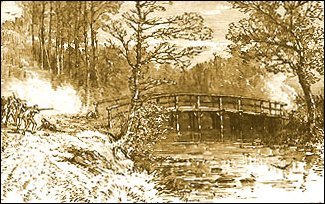
It's Patriot's Day here in Massachusetts, a legal holiday not familiar to many folks outside the Bay State. It commemorates the Lexington-Concord Battle of 1775, as immortalized by favorite son Ralph Waldo Emerson-

By the rude bridge which arched the flood,
their flag to to April breeze unfurled,
here once the embattled farmers stood,
and fired the shot heard round the world


Patriot's Day now means an 11 a.m. Red Sox game, the Boston Marathon, and services and re-enactments in many towns which have companies of volunteer Minutemen who dress up in colonial-era garb and march on their town greens. The Lexington-Concord area has the whole panapoly of celebrations, including a local company of the British 10th Regiment of Foot, the soldiers who were among the companies that marched to Concord that day. As a kid growing up in Concord, I always wanted to be one of the Redcoats. My illusions were shattered one day when I was walking down by the post office and saw a lanky Redcoat take off his tall tin hat and squeeze himself into a tiny VW parked by the curb.

We have an interesting Lexington-Concord-related book ending on Ebay tomorrow- it's a reminiscence about the battle, and the subsequent siege of Boston, by a British officer who was there- Concord Fight. Being so much of the Narrative of Ensign Jeremy Lister of the 10th Regiment of Foot as pertains to his services on the 19th of April, 1775, and to his experiences in Boston during the early months of the Siege.

Published in Cambridge by the Harvard University Press in 1931. Edition limited to 500 copies. An interesting account of the Lexington & Concord fights and subsequent retreat back to Boston by an officer who was wounded at the Concord Bridge. The manuscript account, written in 1782, first came to light when portions were published in the London Telegraph in 1928. Richard Eaton and Allen French of Concord tracked the original manuscript to its owner, a Lister descendant, who agreed to let them make a copy of the entire short memoir, and publish in full the parts that pertained to the Lexington-Concord battle and siege of Boston.

Ensign Jeremy Lister was a twenty-something junior officer in April, 1775, and he volunteered to join Colonel Smith's detachment on the march to Concord. Shot in the elbow at the Concord bridge, Lister's account of the devestating journey back to Boston and his stay there during the siege, as he recieved medical care for his shattered arm, contain many interesting details. This book also contains an interesting Introduction which gives further details about Lister and explains how difficult it is to figure out what happened on April 19th when using conflicting period accounts. At the end of the book there are several letters Lister wrote to his father, giving additonal details of the siege, including a short description of the Battle of Bunker Hill.

For more details click our Auctions link in the right-hand column. And Happy Patriot's Day!

Thursday, April 13, 2006

Reasons to Collect-

There is an interesting passage in the preface to Julia Torrey's 1917 book Old Sheffield Plate. Writing at the height of World War I, Torrey feels the need to explain her decision to publish a book on a subject as 'frivolous' as antique collecting-

"While it claims no direct bearing upon the serious problems of existence in these strenuous times, this book is offered without apology; for concerning war directly and indirectly there is literature without end, and it has been virtuously assumed by many of us that the finer and quieter things of life must be too much neglected. The spirit of destruction is rampant, and is eating its way into our lives whether we will it or no. Our best energies are spent in the creation of huge and elaborate mechanisms for the sole purpose of destroying and of being destroyed. In view of this very fact is it not the more appropriate, in moments of necessary relaxation, to draw attention to some of the minor but truly excellent works of art that are well worth saving from the general wreckage? May not some fragments that have remained to us from the days when many an artisan was also an artist, help to revive in us the spirit of the workman who wrought well that his work might not only serve a useful purpose, but that it might also please and endure?"

- - -
Our new Books on Silver catalog is now available, please let us know if you would like a copy.

- - -
We have a few interesting books ending on Ebay over the weekend, including a scarce Civil War memoir, the 1936 prospectus for the magnificent Arent Tobacco Collection catalog, a very nice Derrydale Press book, and an 1873 account of the Great Fire of Boston. Click the link to our Ebay auctions in the links column for more information.

Wednesday, April 12, 2006

Cutlery: it's more than knives, forks & spoons-

Our new printed catalog, "Books on Silver & Silversmiths", just out this week, rolls along -if you want a copy and did not get one, please let us know. One of the most popular new books in the catalog is a great book on cutlery-

"Cutlery. From Gothic to Art Deco. The J. Hollander Collection" by Jan Van Trigt, published in 2003 by Pandora. There are no words to adequately describe the 534 sets of antique cutlery illustrated and described here. I’m not sure how anyone could eat while holding such objects- you’d just sit there, staring at the intricate details and wonderful carving or enamel or engraved work. One might literally starve while attempting to dine. There are knives and forks with handles of carved bone and ivory, decorated porcelain, gleaming enamels, chased, gilt or engraved silver, handles of coral and agate and other semi-precious stones, traveling cutlery of brass or mother-of-pearl... there are heads, stags, flowers, scrolls, bears, priests, angels, buxom women and bearded sages. There may even be buxom sages, I’ve lost track. Published at the time of the exhibition of the Hollander Collection at the Design Museum of Ghent in 2003. Essential for the lover of silver, and cutlery. Essential even if you don’t love cutlery. It’s that good. Hardcover. 10”x12”, 298 pages, color illustrations, dj; bibliography. New. $75.00

Tuesday, April 11, 2006

A New Silver Catalog-

Our new "Books on Silver & Silversmiths" catalog, featuring 267 books, is out today. If you would like a copy, let us know.

- - - - - -

Although most of the books in the catalog are out of print, one featured book is a great new publisher's overstock- "Contemporary Silver. Commissioning. Designing. Collecting" by Benton Seymour Rabinovitch. Published by Merrell Publishers in 2000.

This is a sumptuous feast of a book for the silver lover, filled with gorgeous photographs of unique and surprising fantasies on the theme of the broad-bladed silver server. Rabinovitch, author of a book on antique broad-bladed silver servers, commissioned more than 60 new servers from a variety of working silver craftsmen, and the results are stunning and provocative. The text describes each server and the silversmiths' ideas in creating it, and also explores the relationship between artist and patron, and even how to become a patron, on a large or small scale, yourself. A fun book which silver lovers will spend hours going through again and again. Hardcover. 9.5"x10", 160 pages, color illustrations, dj. New. Published at $49.95

Publisher’s Overstock available for a limited time for $25.00.

- - - - - -

We have a few Hunting & Fishing books ending on ebay this week. No reserves, because my Uncle Cal, a Maine fisherman for his entire life, always said- "A reserve in hand is worth two if be sea". Of course my Uncle Cal had had a few bourbons at that point and usually ended up snagging his own hat with his fly. But he made a mean meatloaf.


Anyway, we have some books, reasonable bids & no reserves. Click our Ebay Auction link for more details.

Friday, April 07, 2006

Books & Cooks-

We've got a nice new book in this morning- "The Book Lover's Cookbook" by Shaunda Kennedy Wenger & Janet Kay Jensen. A hardcover published by Ballantine in 2003 for $21.95, we can offer a few for $10.00 while they last. Here's the publisher's blurb-

Just imagine—a literary and gastronomical feast contained in a single book! This lovely volume features 200 recipes that were cooked up, served, or mentioned in favorite novels and works of non-fiction, all accompanied by an excerpt from the book in which it was featured. For breakfast there are Mrs. Dalby's Buttermilk Scones (from James Herriot's All Things Bright and Beautiful and Mammy's Yams from Gone With the Wind, while main dishes include Any Beginner's Sweet-and-Sour Chicken (Barbara Kingsolver's The Bean Trees) and Empanadas (Isabel Allende's Daughter of Fortune). The Book Lover's Cookbook also includes such literary specialties as Mrs. Leibowitz's Lentil-Vegetable Soup (Isak Dinesen's Babette's Feast), Ruby's Potato Salad (Charles Frazier's Cold Mountain), Traditional Southern Crackling Corn Bread (The Adventures of Tom Sawyer), Merry Punch (Pride and Prejudice), Pure Pleasure Apple Pie (Garrison Keillor's "Lutheran Pie" from We Are Still Married), and the tempting treat that trumped sibling loyalty in C.S. Lewis's The Lion, the Witch, and the Wardrobe, Turkish Delight.


We have a new issue of our catalog Books on Silver & Silversmiths going into the mail early next week. If you'd like a copy, please send us an email.


We have some interesting Hunting & Fishing and Hunting & Fishing Art books up for auction on Ebay at the moment, and will be adding more in the next week or two, including some nice Derrydale Press items. Please click our "Current Ebay Auctions" link on the sidebar for more information.


Have a great weekend, everyone!

Wednesday, April 05, 2006

An Engineer and the Untranslatable Book...

Future-President Herbert Hoover was first and last an engineer who specialized in mining, and he took both great pride in his profession as well as an acute interest in its history and antecedents. Accordingly, he was fascinated by Georgius Agricola's 1556 folio "De Re Metallica", which was, as he wrote in his autobiography, "the first important attempt to assemble systematically in print the world-knowledge on mining, metallurgy, and industrial chemistry. It was the great textbook of those industries for two centuries and had dominated thought and practice all that time. In many mining regions and camps, including the Spanish South America, it was chained to the church altar and translated by the priest to the miners between religious services."

Hoover continues- "No one had ever succeeded in translating it into English, although several had tried... The problem of the 'untranslatable' Agricola fascinated us both (he and Mrs. Hoover, who was a good Latinist) and finally in 1907 we resolved to translate it jointly. There were formidable difficulties; for while Agricola's Latin was scholarly enough, he was dealing with subjects the whole nomenclature and practice of which had developed hundreds of years after the Latin language had ceased to grow. He did not adopt into the text the German, Italian or English terms for the operations or substances he described, but coined or adapted Latin terms for them... The job (of properly translating) involved finding out -either from the context, from German, French, Italian, or other fragmentary literature of the times, or from study of the processes themselves -what he meant... Sometimes the task amounted more to scientific detective work than to translation...I could often have the meaning of one of his terms worked out in our laboratories. Often enough, when we discovered the meaning of a term we found that there was no modern word to express it because that particular process had been long abandoned. In any event, we grappled with it sentence by sentence, during our spare time, month after month, for over five years."

The production of the book itself, once the manuscript was completed and had been revised four times, was equally painstaking. Hoover asked a fellow-engineer for advice, and was introduced to a printer in the north of England named Frost...

"When Frost saw the manuscript and the original his eyes glistened. He exclaimed that all his life he had been a commercial printer and had always wanted to do such a book. In order to make the book as like the original as possible, he found a papermaker who could produce a sixteenth-century linen paper. He had a font of type cast in exact reproduction of the original except for the ancient letter S, which is confusing to modern readers. He printed it as a folio volume with all the old prints and illustrations in astonishing fidelity to the original. By a little juggling of the opening sentence in each chapter, we were able to include reproductions of the old illuminated initial letters. Mr. Frost bound it in white vellum as the original was bound. No more beautiful job of printing was ever turned out."

But more than simply a translation and reproduction, Hoover also added his own knowledge to the book- "In addition to the translation, I wrote an introduction covering the times and circumstances under which Agricola lived and worked, with a brief biography of him. We included full statement of all the known editions. I prepared extensive footnotes describing previous processes so far as knowledge of them is preserved -including those in Roman and Greek times. The footnotes also explained the processes and methods described by Agricola in relation to our modern practice."

Hoover's translation remains the definitive one, and a beautiful example of bookmaking as well. Perhaps the last word on the profession of mining should be left to Hoover himself, as he related an incident in his autobiography. It occurred one morning at breakfast in the fashionable dining salon of a great ocean liner on which he was returning to America from a stint at Oxford.

"At my ship's table sat an English lady of great cultivation and a happy mind, who contributed much to the evanescent conversation... we were coming up New York harbor at the final farewell breakfast, when she turned to me and said, 'I hope you will forgive my dreadful curiosity, but I should like awfully to know -what is your profession?' I replied that I was an engineer. She emitted an involuntary exclamation and said "Why, I thought you were a gentleman!'

Monday, April 03, 2006

The Portland Vase-

We just got a great little remainder title in- The Portland Vase -The Extraordinary Odyssey of a Mysterious Roman Treasure by Robin Brooks. The vase is a marvelous piece of ancient cameo glass, intricately carved by modern standards, to say nothing of the problems it must have presented for ancient Roman glass carvers.

"Created for an Emperor, exhumed from a burial ground, coveted, traded, smashed, restored, and stuffed full of incident and intrigue, the Portland Vase- the most famous of all Roman antiquities- has captivated everyone who has come into contact with it."

There was Fabrizio Lazzaro, the archeologist/tomb robber who discovered it, Pope Urban VIII who wanted to acquire it, the Princess of Palestrina who supported her gambling by selling it, the Duchess of Portland, who owned it in secret yet gave it a name, Josiah Wedgwood, whose intricate copies finished the job of immortalizing it, the madman who smashed it to bits, and the restorers who managed to piece it back together... all those figures, and more, dance across the glassy stage.


Published by HarperCollins in 2004. Hardcover, 6"x8.5", 250 pages, dj. Published at $24.95. Available now for $10.00.

Sunday, April 02, 2006

Silly Sunday


There are several men sitting around in the locker room of a golf club after a round, showering and getting ready for the 19th hole. Suddenly, a mobile phone on one of the benches rings. One of the men picks it up and the following conversation ensues:

HUSBAND: "Hello?"

WIFE: "Honey, it's me. Are you at the club?"

HUSBAND: "Yes."

WIFE: "Great! I am at the mall two blocks from where you are. I just saw a beautiful leather coat. It's absolutely gorgeous! Can I buy it?"

HUSBAND: "What's the price?"

WIFE: "Only $1,000."

HUSBAND: "Well, okay, go ahead and get it if you like it that much."

WIFE: "Ahh, and I also stopped by a Mercedes dealership and saw the 2002 models. I saw one I really liked. I spoke with the salesman and he gave me a really good price... and since we need to exchange the BMW that we bought last year..."

HUSBAND: "What price did he quote you?"

WIFE: "Only $60,000."

HUSBAND: "Okay, but for $60,000, I want it with all the options."

WIFE: "Great! But before we hang up, something else..."

HUSBAND: "What?"

WIFE: "It might look like a lot, but I was reconciling your bank account and I stopped by the real estate agent this morning and I saw the house we had looked at last year. It's for sale! Remember the one with a pool, English garden, acre of park area, and beachfront property?"

HUSBAND: "How much are they asking?"

WIFE: "Only $450,000, a magnificent price! and I see that we have that much in the bank to cover."

HUSBAND: "Well, then go ahead and buy it, just bid up to $450,000. Okay?"

WIFE: "Okay sweetie, thanks! I'll see you later! I love you."

HUSBAND: "Bye, I love you too."

The man hangs up and closes the phone's flap. The other men are looking at him in astonishment. The husband raises his hand while holding the phone and asks, "Does anyone know who this phone belongs to?"